Get in loser...We’re calling it innovation!
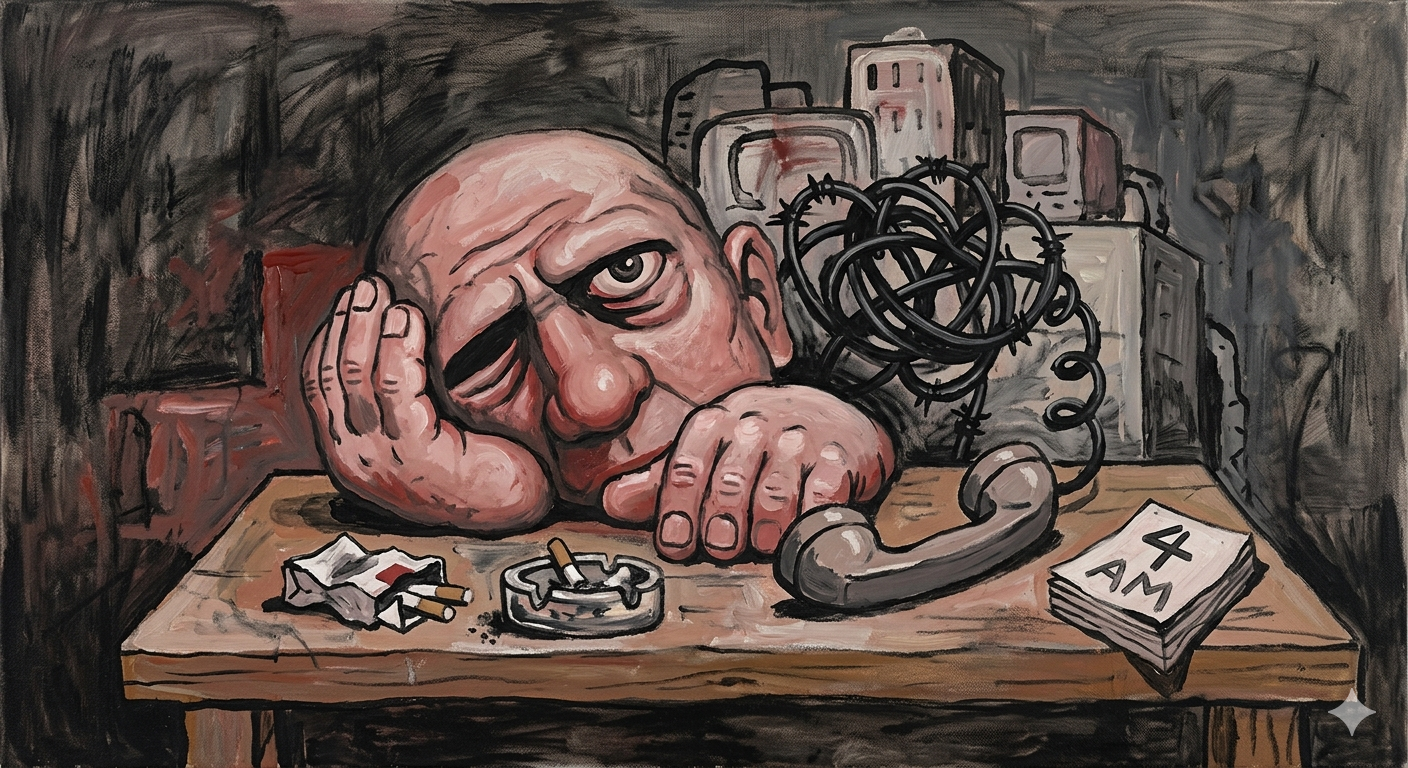
A few weeks ago, I was laid off. “Company Restructuring.” That’s a very clean sentence to write, and a considerably messier thing to receive in a calendar invite.
I’ve had a lot of time since then to sit with what the justification actually meant, what ‘corporate restructuring’ is doing, and what it isn’t saying. So, when Meta announced recently that they were laying off 8,000 people and overtly framed the cuts as a pivot toward “AI investment,” the narrative felt entirely too familiar. I wanted to rant write about that framing.
Before discussing this strategy, it’s important to state the baseline: these are real people, with mortgages, families, and identities tied up in work they cared about. I know something about what that landing feels like. So whatever argument follows, that part comes first.
—
The kicker is that the very same week Meta announced these layoffs, they were also reporting enormous financial strength. It seems they’ve overtly chosen what, and who, they want to invest in going forward. That choice carries an implicit message: We are betting on AI. And the people who helped build this company into what it is today are, in the calculus of that bet, a cost to be reduced.
The narrative usually goes something like this. AI is making teams more productive. More productive teams need fewer people. Fewer people means leaner operations. Leaner operations mean more capital to invest in AI. The cycle continues, the stock price responds, and the earnings call goes well.
It’s a tidy story. It’s just eating its own premise.
Here’s the thing nobody in the ‘strategy offsite’ wants to say out loud: the people being walked out of these companies are not just a line item. They are participants in the economy that the AI future is supposedly being built for. They are the ones who were, until very recently, subscribing to the products, spending their salaries, paying the taxes, supporting the systems and funding the infrastructure around it. Modern economies are still fundamentally built around broad participation.
So when every major company simultaneously celebrates labour reduction as ‘efficiency’, while quietly, the same governments worry about stagnating productivity and shrinking tax bases, something in the logic starts to conflict with itself. At some point, the damage stops being an externality and starts being the premise.
I’ve been watching a particular sleight of hand play out across the industry, and I think it’s worth naming directly. There is a meaningful difference between two things that are currently being described with the same language:
- Doing more with the same number of people, using better tooling.
- Doing more with fewer people, and calling the difference AI.
The first is genuinely exciting. That’s the version of AI I actually believe in: the hard, repetitive, low-judgement work gets absorbed into infrastructure, and the humans get to focus on harder, more interesting problems. That’s a growth strategy. That’s building toward something.
The second is cost-cutting with shittier PR.
And to be clear about scope, I’m not talking about predictive diagnostics, scientific modelling, or the AI systems that have been quietly embedded in infrastructure for decades. I’m talking specifically about the current generative AI gold rush; the large language models, the agentic systems, the automation wave and the particular labour narratives being wrapped around it right now.
I don’t subscribe to the “AI is taking all the jobs” panic narrowly. New technology creates new roles. It always has. There will be genuinely exciting things to build in this era, and some of those things don’t exist yet. The part that genuinely keeps me up at night is not the layoffs in isolation. Restructuring happens. Industries shift. I know this… “It’s just business”… ugh.
What keeps me up is the compounding logic of it. If AI is the future, and the path to that future runs through systematically removing the people who were building it, buying it, and participating in the economy around it, when does the strategy become its own demise? When do the productivity gains on the balance sheet stop outweighing the demand destruction everywhere else?
Unfortunately, the people being laid off in waves like this one spent their careers building the very products being held up as the ‘future’. And are now being told that future doesn’t include them.
The dystopian version of the AI future isn’t the dramatic one. To me, it’s the version where the gains accrue entirely to capital, the damage is distributed entirely to everyone else, and the gap between the two keeps widening until the whole premise collapses. Not with a bang. Just with a very bad earnings call, a few years from now, when it turns out nobody could afford to buy the ‘thing’.
If the argument for AI is that it makes everything better, more efficient, more capable: great. But better for whom?
Who, exactly, is this future for?
If the people who built it can’t benefit from it, and the productivity gains flow upward into infrastructure and executive packages rather than back into wages or jobs, we haven’t advanced society. We’ve just concentrated wealth more efficiently than before.
When enough people have been displaced, when the jobs that replace the old ones don’t pay the same, when the gap between the people building the future and the people profiting from it keeps widening, the economy doesn’t thrive but hollows out. And no amount of AI infrastructure fixes that, because the problem was never a shortage of computing power. It was a choice about who gets to benefit from it.
I don’t doubt that AI is a significant part of where things are going. But the assumption embedded in these cuts is that the path to that future runs through fewer people rather than with more people. And I think there’s a version of this story that’s more honest than the one being told. One where “restructuring” and “AI investment” are sometimes the same decision, dressed up in different language depending on who’s in the room.
That’s a legitimate business decision. It might even work.
But let’s call it what it is… A wealth transfer. Dressed as a vision statement.
—
For the people on the receiving end of this particular vision statement, I know it sucks. Being laid off does something to you, even when you know, intellectually, that it isn’t personal. There’s a grieving process nobody warns you about, a quiet erosion of confidence that takes a minute to name and longer to shake. You’re allowed to be in it.
Somewhere in that process, I reminded myself that the layoff is not me. The insights, the knowledge, the passion, and the things I built my career on belong to me. No company gave me that, and they certainly can’t take it with them when they restructure me out.
AI will continue to change things. The question is whether the people who built this era get to be part of what comes next, or whether “the future” turns out to be a term of art for who gets left out of it.